

Concert Review by Christopher McHale
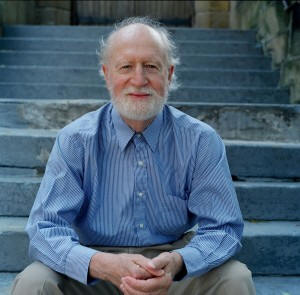 Like
the big river itself, Mose Allison effortlessly flowed through the grooves and
vibes of our American soul, seasoned by the
Like
the big river itself, Mose Allison effortlessly flowed through the grooves and
vibes of our American soul, seasoned by the
Mose
Allison weaved his set list from whole cloth, as one tune flowed into another
and the artist let the songs speaks
for themselves. Only the presence
of someone else’s work required a comment, otherwise he moved from song to song,
his piano as economical as his lyric, his voice and instrument fused into a
single tale, cynical, hopeful, observant, wry, witty and straight forward.
Mose Allison’s authentic American character clearly came through.
Perhaps years ago, Allison’s voice was stronger and punchier, but it did not
matter, because what mattered most, was Allison’s pursuit of the essence of his
songs and the honesty of his delivery.
The quintessential performer, he was up on stage, working the songs, on
another night in a lifetime of gigs.
Mose Allison has always showed up and he has always delivered.
Artists as diverse as The Who, The Clash, The Pixies and Elvis Costello
have all counted Allison as a major influence, yet when asked why he never
became a superstar, Allison simply said, “Lucky, I guess.”
Popping accents on drums supplied by Tom Whaley, adventurous and strong bass
lines by Ratzo Harris, the Mose Allison Trio did not waste any time, as they
opened with three confident solos, drum to bass to piano, before Allison finally
swung the microphone into place.
With the quality of a muted horn, his voice was contained and focused, a
distinct tone, a bluesy edge to the vowels, certain words held, phrased just so,
until the meaning of the lyric washed over the room and drove the point home.
“I
Don’t Want Much,” opened the set, “I’m so
easy going, I don’t keep score,” Allison sang, and the soft style witnessed
the truth of it. He followed with
the old Charles Brown hit, “Fool’s Paradise,” then segued quickly into his own,
“Look What You Made Me Do.” As the lyrics passed it became apparent they
remained relevant, even though some of the songs were more than thirty years
old. “Everybody's crying peace on earth,
just as soon as we win this war,’
Allison sang, from his song, “Everybody’s Crying Mercy.”
The tune “Wild Man On The Loose,” the title track from his mid-sixties
release, illustrated how the artist had evolved, more playful now than years
ago, more laid back, the voice edged in wistful irony as he worked through the
words.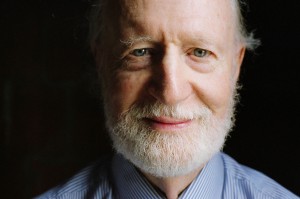
The
breathless pace of the set kept listeners from settling into any particular song
or mood. A tour guide of rapid fire
bursts of observations, considerations, situations, faults, sins, downfalls and
triumphs, Allison introduced us to an engaging parade of passing characters.
“How does it feel to be so good
looking,” “The good get better and
the bad get worse, hello there, universe,” “Your
mind is on vacation and your mouth is working overtime,” “If
you must keep talking, please, try to make it rhyme.”
Whaley’s drums locked into Allison’s strong and fluid tempos, while Harris took
every opportunity to explore double stops, comping chords with a pulsing
right-handed strum, arpeggios evolving into abstractions of melodies hammered
down on the ebony neck of his bass.
Mose Allison’s piano style is firmly rooted in
Every Mose Allison show should feature the Willie Dixon classic, “Seventh
Son.” In the early seventies,
Allison’s version of the tune became a hallmark, introducing him to an entire
new generation of fans. At the Jazz
Standard, he delivered the tune with an easy lilt, the abiding mystery of the
lyric set against a breezy, whimsical interpretation.
What do the words mean? What
does it matter? Hearing Mose
Allison’s delivery was all we needed to understand the tune.
In
2009, with singer-songwriter Joe White filling the producer’s chair, Allison
returned to the studio to record a new CD,
Way of The World.
Allison chose to close the set at the Jazz Standard with a tune from the
disc, “My Brain,” a rewrite of another Willie Dixon song, “My Babe” (which in
turn was a rewrite of the gospel staple, “This Train.”).
“My brain is losing power,”
Mose Allison sang. “No!” shouted somebody from the audience.
An evening with Mose Allison was a gift that no one wanted to end, but in
typical Allison fashion, he quickly twisted the lyric. “1200
neurons every hour.” The
audience laughed. “My brain it's getting
pounded, pretty soon I'll be dumbfounded, my brain, cool little cluster, that's
my brain.”
The
entire set at the Jazz Standard became one cool cluster of words, riffs, winks,
sighs, laughs, nods, revelations and just plain outright fun; sixteen songs, one
after another, a night with a master performer, who is part of our history, part
of our culture and part of our soul.
Photos by Michael Wilson, protected by copyright ©, all rights reserved