

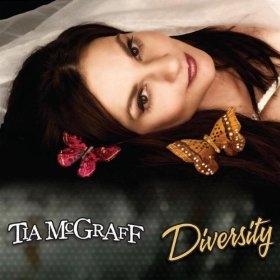
 Diversity
is a great name for singer – songwriter Tia McGraff’s new album, because rather
than reflecting only the country music vibes for which she is highly regarded,
this collection of songs will appeal to fans of Adult Contemporary, Country
Music and yes even to Rock music fans. This is not a contrived recording,
designed to target definite commercial markets, but instead is the natural
progression of an incredible songwriter and gifted singer, who collaborates with
an equally gifted arranger, Scott Brasher and complimented by Ms. McGraff’s
husband Tommy Parham, whose guitar playing takes these songs to another
breathtaking level.
Diversity
is a great name for singer – songwriter Tia McGraff’s new album, because rather
than reflecting only the country music vibes for which she is highly regarded,
this collection of songs will appeal to fans of Adult Contemporary, Country
Music and yes even to Rock music fans. This is not a contrived recording,
designed to target definite commercial markets, but instead is the natural
progression of an incredible songwriter and gifted singer, who collaborates with
an equally gifted arranger, Scott Brasher and complimented by Ms. McGraff’s
husband Tommy Parham, whose guitar playing takes these songs to another
breathtaking level.
The album opens with
the song “Angry Eagle,” a song that Tia McGraff first recorded late in 2009, a
missive to the American government and corporate America about the state of the
economy, with people losing their jobs and homes, and jobs that are shipped to
countries such as China. In February 2011, sadly the song is just as relevant,
if not more. This is not a protest song. It is more of a lament and the posing
of the question why, set to a beautiful arrangement by Scott Brasher.
The pace of
Diversity
changes with “Autumn Leaves” and the changing of seasons becomes the metaphor
for a relationship that is also in transition. It is about a woman who is alone
in love and now she is questioning why that is, for she has been neglected for
far too long. For this song, Tia McGraff’s brand of Country Music is more
contemporary rather than reflecting a twang and there are subtle elements of
early sixties rock in the playing of Tommy Parham (guitars), Brian Hincliffe
(bass), the drumming of Tommy Harden and percussionist Gino Mirizio.
The third song “Lavender
Tea,” presents a lighter theme and the listener might ask if the scene that
unfolds before us is a page taken from Tia McGraff and Tommy Parham’s lives with
the misty ambience, the April rain is falling and as the singer opens the window
she “can
almost hear the leaves waking up from winter,”
and then they sit on the front porch, sharing the paper. As they contemplate a
drive in the countryside the mood is contentment and there is no doubting the
love that exists and Tia McGraff does a great job of conveying that feeling.
“Lavender Tea,” showcases the pretty vocals of Ms. McGraff and the missive is
that happiness can often be found in the simplest of things and just enjoying
what is right in front of us.
“Tumbleweed,” has that country theme, with lonely
people in lonely bars and as Waylon Jennings once sung, “I was looking for love
in all the wrong places.”
It is about
choosing what we think is love and then when morning comes, we realize that a
decision made in a moment of weakness, left us feeling hollow. There is a
reminder here for all of us that there are a lot of lonely people in this world.
You may not know it unless you look closely, because in public they smile, say
all the right things and laugh in all the right places, but they are the single
people, the seniors, the poor, those without family and those who are single
parents without family to help. The metaphors of a ghost town, tumbleweeds and
drifters are used to great effect.
Listening to one of Tia McGraff’s songs is a lot like
watching a good cinematographer at work, as the images unfold before you and
sometimes the colors are vivid and bright, while at other times they consist of
poignant and lonely figures, such as depicted in “Los Souls Left Luggage.”
One cannot say enough about the arrangements
created by Scott Brasher who provides the musical canvass upon which Ms.
McGraff’s lyrical brushstrokes find a home. Tia McGraff accompanies herself on
piano and the playing is soft and gentle, never intruding upon the scene at the
train platform or the lonely figure who sets his luggage down and two people
whose eyes briefly meet. What strikes the listener in this song is Ms. McGraff’s
evocative phrasing, not contrived, but drawn from somewhere deep within. It is
not something that is easily taught, it requires the courage to be completely in
the moment and transparent.
For those who are
accustomed to hearing the more traditional country styling of Tia McGraff make
sure you hold on well, the cinch is tightened and your feet are firmly planted
in the stirrups, because “Radical Road,” a McGraff / Parham collaboration rocks
out the house with scintillating guitars courtesy of Tommy Parham, Pat Buchanan
and Dan Walsh, with Spady Brannon on bass.
“Vega Star,” is a song
that many in the performing arts and athletes and people in many walks of life
can relate, as it talks about being so close to that dream, to being what might
some people might call “a star,” and the disappointment that sets in when the
dream is not realized. The song however, is not morose, instead the lyrics, “I
think you are brilliant, you really knock me
out. Do you know just what you are?”
that stardom is not always found on the stage, but often it is found in the
difference that you make in people’s lives.
Despite our comprehensive
look at and listen to
Diversity by
Tia McGraff, we have barely scratched the surface of this collection of thirteen
songs and the reader would do well to explore songs such as, the Native American
(in Canada First Nations) song “Two Wolves,” with its beautiful wood flute,
rattle and chants. Other songs such as “Fallen Down,” a frustrated relationship
song, “Waggin’ The Dog,” a social commentary, with driving guitars and gritty
vocals, the hard hitting “Cold As Steel,” in which Ms. McGraff demonstrates that
she is not always about being sweet and the pretty “How Pale The Rose,” adapted
from Heinrich Heine’s poem “Why Is The Rose So Pale.” The album closes out with
the song “Lighthouse,” a gentle song about finding our way back home.