|
|
Lisa Hilton and Her New Album - Naturally |
|
We sat down with Jazz pianist and composer Lisa Hilton, who on November
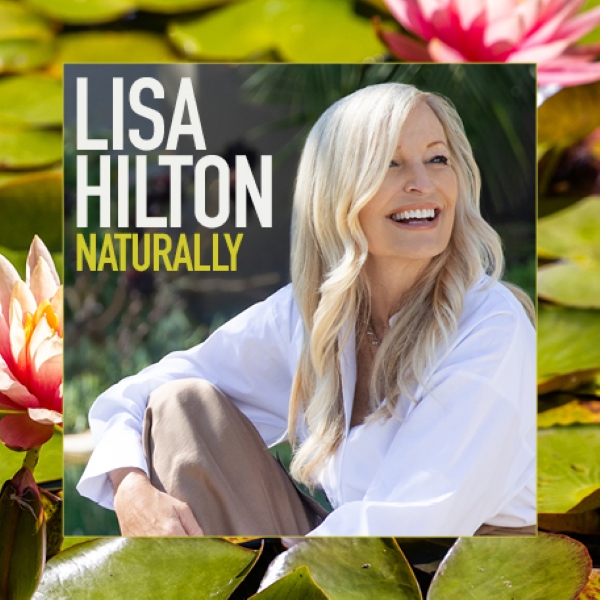
27, 2026, is releasing her thirtieth album, simply titled Naturally.
Before we get into why the album has that name, we thought we would
begin, where our conversation actually ended, as she talked to us over
Zoom, from her Malibu home. We wanted to know what she hopes the
listener may get from listening to what once again is a beautiful
collection of songs, nine originals and two cover songs, “Peace Piece,”
by Bill Evans and “My Favorite Things,” by Richard Rodgers and Oscar
Hammerstein II.
“I don’t think I am trying to tell anything, so I don’t have hopes that
someone will have a certain point of view. Musicians want to make the
world a better place. If you could perhaps, if I could, if we could,
perhaps lift your day for fifty-seven minutes, I think that is the best
we can do. I think we can all use fifty-seven minutes and I think that
this album surprisingly, comes in gradually. It doesn’t hit you
immediately, but you feel drawn into it. By the end I feel very uplifted
and I hope the whole world and billions of people feel uplifted. That
would be the greatest gift to us that we would listen to the world and
listen to what is going on out there. (That we) listen to your issues,
while somehow lifting and (providing) optimism. When you are finished
listening to the album you will start to notice everything that is right
in the world around you and what is going well in your life,” says Lisa
Hilton.
Shortly after we last sat down for a conversation in December of 2024,
there were devastating fires in the greater Los Angeles and Los Angeles
California areas, some of which occurred in Malibu and although her home
was spared, three family members were not so lucky. Those types of
catastrophic events leave a lasting impression on both your psyche and
the lens through which you view the world.
The last album was called Extended Daydream. The idea was
whatever is going on now, we still have to extend our daydreams into the
future, so we can still be optimistic.
When I play that song (the title track), it is still very powerful to
me, because I remember what is in that song. It ended up being a
beautiful album and J.D. Allen did a beautiful solo improvisation on it.
The song stands for that time. It is for everyone who has gone through
trauma, but of course I think of Malibu and those southern California
fires. That does change you forever, but I hope it gives me greater
empathy always. I still want to be able to write fun songs and enjoy
playing the piano in all of the different ways that I do.
Artists process what is going on in the world through their music.
Sometimes something really lousy is happening and I can get the most
beautiful song out of it. If I can create beauty it seems to counteract
what is going on out there. Sometimes I appreciate the good stuff in
life too. I want to always be looking for what is right, what is freely
given and that is around us all of the time. We often want to go through
our days thinking about what is wrong. (For example) this doesn’t work
again, there are how many pages on the election ballot? We are always
for what is wrong, but I do not want to do that in my life, so I try to
show in my music, these are all of the things that are going right, but
to be empathetic about our issues as well.
There are plenty of artists who want to speak of the challenges in our
society and that is good too. My role is to be aware of what is not
going well and to be optimistic about the future,” she explains.
As for the title, Naturally for her new album, Lisa Hilton says,
“Can I tell you that story? (she laughs lightly) Sometimes, the
title of a song or the title of an album can come easily. I am not sure
why. Last year’s album title and song titles came pretty easily and the
song sequence, the order that they go in, went really easily. This year
I was having a lot of problems.
When I was composing, I was in the recovery time after the big fires in
southern California. Even though my home did not burn I have three
family members who had homes that burned. It affects everybody. Our
power was out for nine days I think, not just power, even water for a
little while. That is a certain level of trauma you are trying to
come out of. I did not want to be composing all sad music, so the titles
were (not so) optimistic. Finally, when I was getting ready to record
the album, the titles started to change, and they became more
optimistic, as I worked through the issues. For the album title I had no
idea, so I gave the designer who was working on the title, six different
titles and I (said) hopefully you can use one of those. I had no clear
direction. He chose Naturally out of the group. He knows me
pretty well, we have gone hiking and taken pictures or down on the beach
he photographed me where we worked on the album covers. I am always
outside. I like to be outside.
While I was preparing for this album, I was reading a book about Cedar
Walton, a great Jazz pianist. He had a lot of albums too. As I was
finishing the book, I was finishing the album and it was the same week
that I was going into the studio. I loved reading about him, a Jazz
musician and in preparing the music it was like a 360-degree experience.
When I got to the very last chapter in the book it said that he passed
away. Cedar Walton’s very last album (that he played on) was called
Naturally (Editor’s note: It was saxophonist Houston Person’s
album and Walton was featured as a side musician). I thought,
I can’t even believe that. I thought it was a good indication to stick
with that title. I didn’t realize there were some other albums with that
title. I hope I get more (albums) and this is not my last one.”
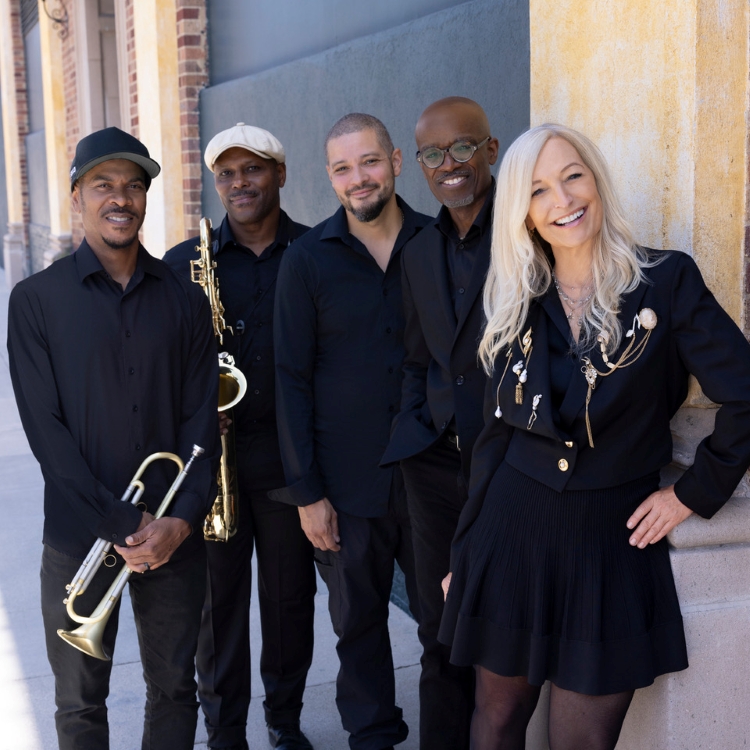
Lisa Hilton gathered together longtime friends to play on Naturally,
including, the aforementioned J.D. Allen on sax, trumpeter Igmar Thomas,
drummer Rudy Royston and Luques Curtis (bass). Of course, Lisa Hilton
played the piano.
She pauses and then says, “Ever since I started working with people, I
thought I only want to work with the best people. Then after a couple of
years, I changed that, I also want to work with people who are nice. If
you see me working with the same people over and over again you know
that, not only are they masters of their musical instruments, but they
are also really kind people. Now you know I work with the best people
who are also nice.
Once in a while I do change things. I do have different ideas, like
maybe I should do a Bossa Nova or maybe I should do another solo album.
I really like what we are doing right now and I think we can really grow
with it. So, I am probably going to do another album with this group. I
am really happy with the last album and this album. I love my engineers;
they are terrific engineers. I really like the sound.
When I first started out, I could never get the sound that I wanted. I
finally have a great sound and great studios and great people that I
work with.”
When you cover a song, which you rarely do, how do you make it your own
Lisa?
“That is the hardest thing for me, because as a composer I prefer
playing my own music. I can play someone else’s music and it is like
borrowing their jacket or their hat and maybe it is very nice, but I
still don’t feel like it is mine. If I am going to play somebody else’s
music it has got to be a great composition, because it has to hold my
interest for a long time and I want to learn from it. What makes it a
great composition? If I play and study it, I am going to learn something
from it.
On the last album I did (the)
Miles Davis song, “So What.” I got into the studio and I was like
am I crazy, why am I doing this? I want to investigate those great
compositions. How do I make them my own?
I don’t change things too much and I just get in there and
massage a couple of things. I want the unique energy of that song
composition to come through. I want you to hear that composer. I want
you to hear Miles Davis. I want you to hear Rodgers and Hammerstein II
or Bill Evans. I think you will hear my touch on the piano and that is
what makes it partly my own. If I am choosing only the best
compositions, how can I improve upon them, maybe I can just show a
different point of view. They are mainly pretty true to the piece. I am
not trying to remake a master composition. That is not my goal or to
look at all of the different things I can do here. That is not ever
going to be me. That’s not me. I want to honor the composition. I want
those composers to rest in peace!
There is always that element of surprise. Always that element of
excitement. There is always a little bit of nervousness, as in, what is
going to happen here?
We record the whole album in one day in about six hours. You can’t fret
about being perfect. You can’t worry. We never have more than three
takes, once in a while two. It is let’s keep it loose and let’s keep it
moving.” The conversation turns to the Bill Evans song, “Peace Piece.”
“We all could use a bit of piece of peace. He was renowned for the
remarkable things that he recorded with Miles Davis, as well as his own
trio was really famous. A follower sent me that tune, because he thought
it was so beautiful. I was familiar with it and I had played it in the
past. I felt we all need that feeling of peace and we have all been
touched in our lives, in the past few years, so I decided to put it on
the album.
Originally, it was the improvised piece. I stayed pretty true to what he
recorded. There is a little bit of Lisa in there too. It is tricky,
because he plays exactly the same notes with the left hand in the bass
section for the entire piece. It is a little trickier than you would
think to play the same thing every single time for four and one-half
minutes. I love it. I really like it,” she says.
One of the most beautiful songs on Naturally with one of the most
romantic titles ever, is her own compositions, “I Want to Spend More
Than A Moment With You.”
“I was thinking of love in all of its different versions. I know someone
who is young and getting married for the first time. I know someone who
has found love again in later life and they are getting married. I know
people who have been married a long time. I am just as happy for the
young people as I am for the not young people. I am also happy for
people who have had long marriages. The idea behind love is, I want to
spend more than a moment with you. I want to see where we are going to
be in the future. I want to be with you and that is something I actually
said one night. I thought, as I sometimes do, that is a good song title.
That one (song title) came very easily.
Then I was able to compose with that idea in mind. A lot of the time I
don’t know what is coming out of the song. I am following a musical
curiosity. I don’t actually know what the tune is about until later.
With the love song I knew that was going to be about love, so of course
I wanted it to be pretty. I only have a few romantic songs and I wanted
this to be a good one. It is about all of the different stages of love,
the beginnings and the long established and beginning again. Those are
wonderful feelings. It can be wanting the closeness of a friend or that
of a mother and daughter and wanting to remember those moments,” she
says.
As for “Transcendental Tango,” she says, “That is one of those songs
that I was a little unsure about the title. In the olden days it was
easier to choose a title, because you couldn’t go on the internet and
see there were already fifty people who had chosen that title. Those
earlier songs like “Nocturnal” and “Getaway,” (from the 2013 album of
the same name) well there are a bunch of those.
It is an exploration of some Latin rhythms. I like exploring what we
call in Jazz room music the different modes. A mode is the key that
something is played in and we are used to the major keys and the minor
keys. There are other keys which have a different ambience and those are
fun for a composer to use and to explore. In “Transcendental Tango,”
that is what I did in the bridge section. In the middle of the piece
there is this little abrupt shift. When you get to the end of it, we go
into a Latin thing.
I think of composing like painting, to bring different colors in. I want
to keep your excitement going. I want to keep your interaction going. I
like to bring in different colors or different harmonic ideas and
rhythmic ideas. I think that is what Jazz in this century should sound
like. We are used to seeing, hearing and tasting all different cultures,
so if we are continuing shopping or referencing one particular (type of)
Jazz from one particular area then that doesn’t seem how we
should be looking at Jazz in this millennium from anywhere these days.”
As our conversation winds down, Lisia Hilton provides some insight,
“Composing is always exciting. Then I would say, one day in the studio
is by far the most exciting thing I do all year. After the album
finishes up, there is a lot of work. It pulls me away from the piano and
what I love about the song.
Each one of these songs is like a child that I have raised from seeing
the potential and growing it and nurturing it. The finishing pulls me
away from that. Right now, this time of year, people are hearing this
music for the first time. Now it begins to feel like Christmas, I like
that song, I love “Peace Piece.” This begins my Christmastime when I
feel like I am connecting with the world, which is what I started out
with nine or ten months ago. Each phase has its own part that I really
love. Now I am thinking
about which ones, I will be performing next year in concert.”
Please visit Lisa
Hilton’s
website
and you can follow her on
Instagram
here.
#LisaHiltonMusic #LisaHiltonInterview #LisaHiltonNaturally #RivetingRiffsMagazine #RivetingRiffs #LisaHiltonComposer #LisaHiltonCompositora #LisaHiltonPianista #EntrevistaMusica
|
 “Of
course it gives you greater empathy for the world. To go through a fire
that was so large, tragic and to know so many people who were harmed
this way or that way, it created a greater empathy for all kinds of
issues that are going on around the world. That is the job of an artist.
We are supposed to be speaking of the times. I thought it was imperative
to be aware of that empathy for those who are going through those
difficult times, but as an artist I want to be optimistic about the
future.