|
|
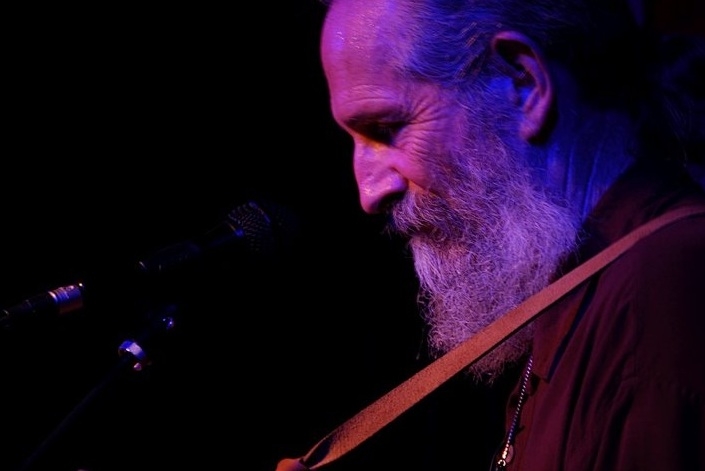
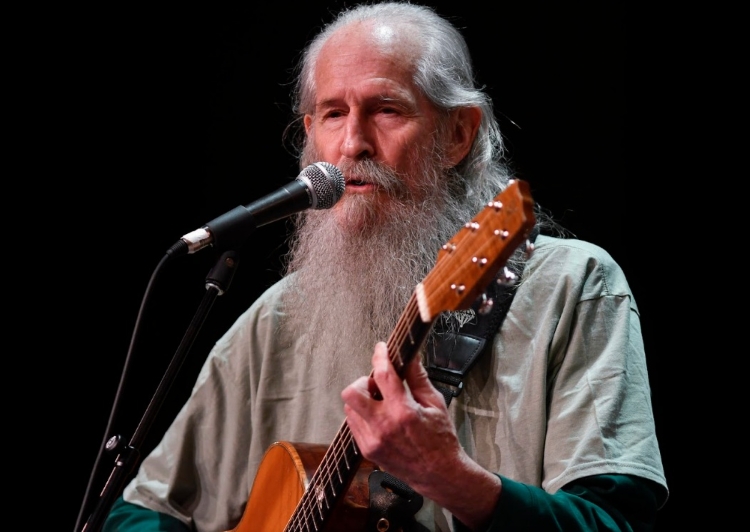
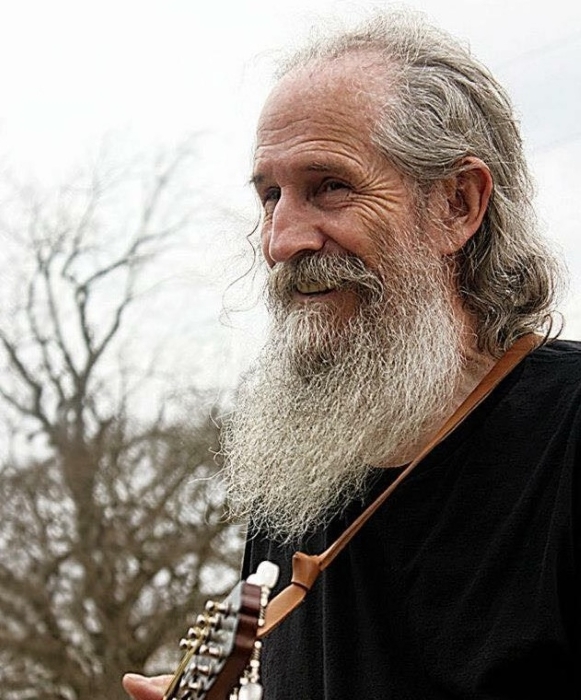
Hank Alrich, Storyteller and Broken River |
|
Many if not all of Hank
Alrich’s songs on his new album Broken River tell stories and that
should not be surprising, as he joined this writer in conversation for
ninety minutes recently and it felt like sitting across from the
legendary Davey Crockett, except there were no exaggerated stories of
Hank wrestling a bear. Maybe that is for a future album. That is where our
conversation began…with the stories, not the bear! “Almost all of them
(songs) have a story and that is how I work. People like to talk about
their intention and meaning, but I honestly don’t understand the process
of what brings me a song. As a friend of mine said, do not dig too
deeply into understanding how a process works. I will be washing the
dishes or sweeping the floor or splitting firewood and a line will come
to me. I don’t know where
it comes from and I have learned that if a line gets my attention, I
better log it. I will say it into a phone or I will somehow save it.
I will dry my hands from washing dishes and I will write that
line down and I will go back to washing dishes and thirty seconds into
washing dishes the next line comes (he says in jest) it takes forever to
wash the dishes sometimes. In November of 2017
songs had just been coming and coming. I drove from California (to
Austin) for the Armadillo Christmas Bazaar. For several years I was
directing the music which is embedded in that wonderful arts and crafts
festival. I told myself you need to stop writing and get on with getting
out of here. I was literally putting stuff in the van and the opening
lines and “The Perfect Hat,” shows up, the second song on (this) album.
By the time I had the van packed I had all of the lyrics. Now it had
taken too long to pack the van. I didn’t actually put the music together
until I got to Austin. It
is one of those songs that led Andrew Hardin to say, you know we have to
record this stuff. That song caused me to throw one I had on the list
off of it.
The title song “Broken
River,” opens the album and the images are so vivid the listener feels
like they are watching a film unfold before them. Each person in this
song comes to life and the events feel more real than part of a song. Hank Alrich explains,
“I was at home, alone in the afternoon, quite a few years ago and I was
having a sandwich. I had my laptop open to Facebook. George Wirth is a
good songwriter and we are close he and his wife, through other friends
and through music. His wife Brenda was in Mobile, Alabama visiting her
parents and he (told me) I
was just off the phone with Bren and she said the roads are covered with
ice. So, I wrote to him, it is snowing down in Mobile and the roads are
covered with ice. How much will this cost us, who is it sets the price.
I went to hit return and I went wait a minute (he gestures as though
he was going to push enter on the computer) That just kept going.
Water shows up a lot in my work. The verse about the river I am not
exactly sure where it came from, except the problems we are having with
water and what we are doing with our tributaries. I think of Randy
Newman’s “Burn On,” and the Cuyahoga River being on fire. (Editor’s
note: Newman’s song recalled the river, in 1969, which was heavily
polluted with toxic chemicals and oil caught fire, resulting in the
lyric “Burn on, big river, burn on.”)” Continuing he says,
“The third verse, Katie hit the windows. That is from memories of the
snowstorm in Austin Texas back in the seventies. It was the first of a
series of them. I had a Saab and I also had tire chains that nobody had,
so I was totally mobile. I’d had decades of experience driving in the
snow and nobody else did. I headed to town and a DPS officer had all the
cars stopped at the top of this grade on the way into Austin from Lake
Travis. I was turning off the 620 to the 222 to head into town and you
go about a mile and one-half and there is a steep downgrade. It is true
that anyone with regular tires was going to meet absolute disaster and
he is trying to wave me down and I just act like he is waving at me. He
doesn’t have chains and all the Texans can hear chink, chink, chink and
they want to know what that sound is. It is old U.S. style chains,
before our modern European stuff. In a state as flat as Texas, there are
hills in (Austin) and people would head down one of these streets and
they would start to slide out of control and they would put on their
brakes. They would start skidding and a few of them would go right
through plate glass windows. That led me to Katie
and her spinout. I pulled that out of the air and for some reason I
thought of a young girl from Houston that I heard sing at a house
concert. She was phenomenal and really nervous. She said every time I
looked into the audience you were smiling and it really helped me. She
became the protagonist and it just led from one thing to another. The part I didn’t
understand and I am not sure I do now, is once it is all worked out it
all ties together. There is a lady with an easel and she needs somewhere
to paint. I was thinking what the hell is that. What is going on there?
Then all of a sudden one thing leads to another, gal needs water, a lady
and her baby need food, a woman and her family need in from the cold.
Then the (part) about the tower is coming down, talk about the weather,
smothers every radio. Well, if we think of propaganda as a snowstorm of
BS and the towers are radio towers. While I was writing that down the
Twin Towers were in my mind at the same time. I don’t stop to analyze,
because it doesn’t do me any good. It just screws things up. Sometimes I
don’t know what a song is about until I am almost done with it. This is
what I am writing about, who knew? Finally, we are hoping that the river
will save us and the lady with the lantern, that image is the statue of
liberty. What am I writing, maybe the song will let me know when I am
done. Oh, well that works. I really very often
have no idea what I am writing about until there it is. I didn’t know
where “The Perfect Hat,” would wind up. There were a bunch of twists and
turns of the imagination that tickled me.” Hank Alrich’s daughter,
Shaidri Alrich, lends her background vocals to “Broken River,’ as well
as appearing on “Fast Money” and “Blue Guru.” “Shaidri rhymes with
shade tree because she’s cool. Now that I am older the kids probably
understand me and like me better than they did for a long time. She is
my singing daughter. All of my children are extraordinarily talented in
some way. She has other talents, but she has been a singer since before
she could actually talk. When she was a toddler, and wandering around
the house, she would be humming melodies and she would be accurate. They
would be on pitch and she would learn to talk and all of a sudden, she
was singing. We have been singing
and playing together for a really long time. She is also a really good
writer. Usually, we sing whole songs together. She is great at picking
up harmonies,” he says. Warren Hood is the
fiddler on “Broken River,” and his instrument’s voice is like another
vocalist. “Oh, it is another
voice. He was chosen deliberately. Kevin wanted another instrument and
he suggested Cindy Cashdollar (editor’s note: She plays dobro,
electric guitar and lap steel and won five Grammy Awards with Asleep At
the Wheel) and that would have meant sending off another tape. He
also suggested Lloyd Maines ( multi-instrumentalist) who is a friend of
mine, on dobro (editor’s note: Maines is also a Grammy Award winning
producer). Then for some reason I think I said I want Warren Hood. I
have known Warren quite a while and I knew his dad. I have a lot of
respect and love for those people. Warren is just a delightful human
being, more than competent than all of us elders and totally respectful.
He is the youngest person to play on the album and I am the oldest.
Everybody really dug
into the material which is really gratifying for me. They played from a
soulful place. Fred Remmert (sound
engineer) mixed my vocals like a record from the late 1950s or early
‘60s. Why are these old microphones so famous and why do we love them,
because they don’t have high frequency response. Articulation and
elocution have been part of my fetish if you will for a really long
time, both live and on a recording. That is a long
deviation from Warren, but yes, the violin is an evocative instrument.
They all are in the right hands. Warren definitely has a voice and he
really liked the song, so that helps. “ The song “Locomotive,”
is yet about another weather event, this time a tragedy that took place
in Oklahoma City. He says, “There is a
songwriter and excellent musician and she is from Woody Guthrie’s
hometown (Okemah) in Oklahoma, Susan Herndon, we met her at the
Southwest Western Regional Folk Alliance Conference in Austin. When
Shaidri and I first (arrived) there were probably only ten people out of
the hundreds that were there that knew who we were. For our first
showcase there were only two people in
the room. Susan invited us to
join her on tour in Oklahoma. We were only two days into that when a
tornado tore through Oklahoma City. The guy on the radio announced it
and people were trying to get out of downtown on the freeway and the
tornado decided to go right down the freeway. It was turning trucks over
and houses were torn apart. People were laying dead in fields. You hear
about these disasters and they will always touch you in some way if you
are a compassionate person. If you have just been somewhere and
immediately found friends who will be friends for the rest of your life
and that is where it happens it hits you emotionally differently.” The song title
“Locomotive,” may seem odd at first, because there is not a train in
this song, but as Hank Alrich explains people described the sound of the
wind as though it was a locomotive. The
window, the tornado becomes the central character in the song and it
shows no mercy, not caring who you are or your station in life if you
are caught in its path. The song “Locomotive,”
has a Delta Blues vibe to it. For several years Hank
Alrich managed the Armadillo World Headquarters in Austin, Texas, a
music venue that featured up and coming regional talent, artists from
other regions of the country and established stars. He talks about those
days, “Every once in a while, an artist would play at the municipal
auditorium across the street for a maximum of 5,000, otherwise the town
and what was available was too small for major acts. They played San
Antonio, Houston, Fort
Worth, Dallas and that was it. We could sell 1,500 tickets and the
prices were really, really low, but we had a culture that was thrilling
for artists to play there once they had done it. That brought people
like Van Morrison and Frank Zappa back, people who easily could have
played across the street for more money. I have to give credit to the
women who were running the kitchen. You weren’t getting Kentucky “fried
chicken” or any crap like that. You were being served shrimp enchiladas
made by hand and stuff like that. It left people in awe of the way they
were treated. It was just a funky space with nothing classy about it. I remember Count Bassie
walking in and they would think holy shit how is this happening? His
band was walking in and these were classy cats. They were not snotty,
but they were upscale. There were no better places to play than the ones
they had already played at the top of the heap. They were coming into
this hippy dive bar and it was the biggest dive bar in Austin. You could
see the looks on their faces, like what in the hell have we gotten
ourselves into? By the time they were through with the soundcheck they
were grinning and pals with my people and having so much fun. Carla Bley, we lost a
fortune every time we presented her, but she had an amazing eleven-piece
band. I was driving her and two band members back to the airport and she
was lamenting, what good is it if you have a great big hall and we can’t
fill it. You are losing money and I said you know it can’t always be
about the money. Sometimes it has to be about the art. Your performances
are incredibly important to the people who love music from a cultural
sense in Austin.” Maybe that is the most
important thing for you to know about Hank Alrich. He is about people,
the people he has worked with over the years and the people he
collaborates with now. When he talks about his six adult aged
children, he calls them extraordinary. When he talks about the Armadillo
World Headquarters that once existed, he often deflects credit to the
kitchen staff or the crew setting up lights or sound or security.
When he does take credit for
something you have to listen between the sentences, because often his
little bit of credit that he affords himself is sandwiched in between
saying this happened because of the guy doing dishes, or the women
cooking the meals or someone he happened to know for recommending Bruce
Springsteen when he was just starting out. In a documentary about
the Armadillo World Headquarters that you can find on YouTube, Maria
Muldaur, described how it embodied the community culture. Hank Alrich says, “She
is absolutely right. It was a cultural arts center. It had dancers,
painters and sculptors and poets. Some of them were there in those roles
and some of them were working in the kitchen or with the security crew.
It was fascinating in that regard. It was a cultural arts centre in the
way that I don’t think anybody before or since have embodied. There are
many good places to hang and to hear wonderful music, but there is not a
place where they are coming together like that. Austin was attracting
people like that, but the Armadillo drew outlier kids with tremendous
artistic talent from all over the state of Texas. In this case what we
witnessed was artistic creation.” There were many fine
musicians that helped make the album Broken River possible and we
would be remiss if we did not mention them. Andrew Hardin played
acoustic guitar and electric 12-string guitar, Glenn Fukunaga on bass
and bass violin, Rick Richards was the drummer / percussionist, Andre
Moran (electric slide guitar), Red Young (Hammond organ and piano),
Floyd Domino played piano for “Blue Guru,” the aforementioned Warren
Hood on fiddle, Keith Little (5-string banjo), Shaidri Alrich on
background vocals, Hank Alrich accompanied himself on acoustic guitar
and of course sang and Barbara Nesbitt provided vocals for “Fast Money.”
The album was recorded at Cedar Creek Studio in Austin, Texas.
The production team included audio engineers Fred Remmert and Andre
Moran and Remmert also mixed and mastered the record. The conversation with
Hank Alrich was about ninety minutes and sometimes we both strayed away
from the conversation and came back, but this writer could have listened
to his stories for hours. It is rare to find someone whose stories never
place him as the central character but is always a weather event or
something else or simply someone else. Please take time to
visit the
Hank Alrich website.
#HankAlrich #BrokenRiverAlbum #BrokenRiverAlrich #ShaidriAlrich #RivetingRiffs #RivetingRiffsMagazine #FloydDomino
|
 I
don’t get it and I never will. I have tried where I will sit down at
this time of the day to write and I write stuff I don’t want to hear and
I don’t want to play. I am always willing to become a better musician.
It is not that I am a songwriter, I am a musician and composition is a
part of that.
I
don’t get it and I never will. I have tried where I will sit down at
this time of the day to write and I write stuff I don’t want to hear and
I don’t want to play. I am always willing to become a better musician.
It is not that I am a songwriter, I am a musician and composition is a
part of that.