|
|
Alan Williams is Floating on a Dreamline |
|
On March 29, 2026, singer, songwriter, musician Alan Williams’ journey
that began as a child and Julie Andrews will come to a rest with
Floating on the Dreamline the unofficial release of his new album
and his retirement concert. As we sat thousands of miles apart recently,
at opposite ends of a Zoom call this writer could only have wished that
our conversation had taken place in person. Alan Williams is the kind of
person you warm up to in a heartbeat. He is thoughtful, intelligent, and
he is as much interested in the interviewer as you are in him.
Let us add some clarity to that Julie Andrews comment we made, a
reference to him as a child seeing The Sound of Music. With a
smile only leaving his face for fleeting seconds during our entire
conversation he explains.
“Who can say no to Julie Andrews on the top of a mountain? I don’t
normally gravitate toward musicals, but as a young impressionable child
that seemed larger than life. It was so successful back in the day you
could trot it back out to the theaters a couple of years later and the
crowds would pour in. My dad took me to see it when I was three years
old. We were in Morristown
Tennessee,” smiling he continues, “I don’t think Julie Andrews was ever
planning to make an appearance there.
I don’t remember this, but I have been told the next day my mother was
in the kitchen and I was around the corner and there was a piano, and I
don’t know why we even had a piano, because nobody played and she heard
somebody banging out Do-Re-Mi. It was me with my hand above my head to
touch the piano keys. I found middle C apparently and I began to play
the song from the movie.
Immediately it was we’ve got a prodigy let’s get him lessons. This is
something. I was three years old and there was no way I was practicing
piano. The lessons fell apart after a couple of weeks, but I think the
seed was planted to make music and I think piano was the instrument by
which I would engage music. It has changed over time, but for my whole
time growing up it was piano.”
“That song came out of a slightly altered guitar tuning. Because I am so
lazy, once I have done a new tuning, that is the tuning for a while.
Part of the challenge is can I give these songs a different identity?
The Bossa Nova is not any kind of a feel or groove that I would normally
be inclined to do. I played a chord, then I played another chord and I
thought I don’t know, we’ll see.
I like that you said it is naked, simple, and clear, because the theme
of the song is born from the struggle I had finishing the lyric. I have
a dozen versions of that song because I was trying so hard to make it
something. Instead, I went back to the first six or seven phrases that
popped out in the first twenty minutes when the song started to being
born. I thought they were throwaway lines, but then (it was) no I need
to listen and they are fine. It doesn’t need to be anymore than this.
Just add what is missing. It is a song that is almost addressed to
myself, just get out of my way. Themes will materialize and the problem
is you are putting barriers in front of you that aren’t necessarily
there,” he says.
Wait a minute! What happened to the piano prodigy?
“The music I liked was all guitar players. (He grew up in the sixties
and seventies). There was so much music that was popular and I
remember I would dutifully practice my Classical piano pieces. Then I
would try to play along to Beatles records and I would learn how to play
“Lucy in the Sky with Diamonds,” or whatever keyboard-oriented songs
there were. After a while you run out of cool things to do, because the
really cool things are on guitar.
I got a guitar and I learned the basic chords, but I didn’t understand
how to play melodies. I understood how to play chords but moving your
fingers up and down the fretboard was a totally foreign concept and
remained so for a very long part of my life. Most of the music I make
these days is guitar based and that came about, because I had a little
falling out with my piano. It was nothing destructive. I played
Classical piano as a kid all the way through high school. I was
dabbling in Jazz the best I could understand it which was not
very deep. I went to a program at college through a conservatory where
they had a small program. It was a blend of Classical and Jazz.
They said okay this is how it works and for your piano lesson you can
study with a Jazz teacher or a Classical teacher and I said no more
Classical, Jazz is it for me. They gave me a couple of options and I
chose the name of somebody who had worked with somebody famous. Jaki
Byard used to play piano for Charles Mingus (Editor’s note: Jaki Byard
played on the 1963 record The Black Saint and the Sinner Lady).
(I thought) that sounded good.
I was in the hallway (waiting) for my lesson and the way it was taught
there were two pianos in the room and the door was closed. This music
was pouring through that was beyond my comprehension. It was
staggeringly good and I thought wow I don’t understand that at all. I
don’t know what is going on behind that door, but if that’s Jazz I am
not a Jazz player. I don’t want to play Classical music, so if I am not
a Jazz player, I am not a piano player and if I am not a piano player, I
am not a musician and if I am not a musician I am nothing. I got up and
I left and I never went to my lesson. Nobody paid attention. Near the
end of the semester I knew they were going to throw me out of the
school. Somebody finally realized I wasn’t going to my lessons and they
said Alan what is going on? I said I haven’t gone to my lessons, so go
ahead and kick me out. Instead, they said why? I said I like songs and I
know I shouldn’t be here. They said why don’t you become a dual
composition and voice major? You can take some voice lessons and you can
work with a composition teacher on songs,” Alan Williams recalls.
Continuing he finishes the story, “It wasn’t at all the attitude that I
expected, but it was profound. Instead of them throwing me out, for not
being what I presumed they wanted they allowed me to be who I truly
wanted to be. I am ever grateful for that and I do tell that to my
students (oh yes, the guy who was not going to stay, became a music
teacher. More on that later.) to say don’t do what I did, because I
had this mini decade phobia about the piano and it was not good. Don’t
give up on your thing.
Many decades later as I was trying to finish a dissertation for my PhD,
I was in total writing avoidance mode. (I thought) what can I do to
distract myself? I picked up my guitar and I thought I have never
learned how to play this properly. I know what I will do I will learn
how to play guitar instead of finishing my dissertation. That seems like
a wise thing to do, which it wasn’t. Over a period of a year and
one-half I learned to play the guitar the way I wanted to and finished
my dissertation.”
It seems like we missed a step or two here. Who were Knots and
Crosses? That sounds a bit like Dungeons & Dragons and what
does all this have to do with a dog hair?
He explains about Knots and Crosses, “It was the first band that anybody
wanted to see.”
While at Boston’s New England Conservatory of Music he formed a band
with bassist Greg Porter, drummer Ben Wittman and composer / vocalist
Susan Botti. That was not Knots and Crosses. Stay with us on this one.
That was Danse Real. They were a Jazz / Pop / World Music band. That is
quite a wide-ranging style of music. Then upon graduation the Folk-Rock
band Knots and Crosses was formed with Rick Harris and Carol Noonan.
Greg and Ben were not fulltime members of Knots and Crosses (but they
are on Floating on the Dreamline!)
“We were way too loud for the Folk clubs.
Fortune smiled when we saw a performance by Richard Thompson at the
Paradise in Boston. We saw that you could have really good songs, an
acoustic guitar and you can have all of the power of Rock. You don’t
have to choose; you can blend them. That was the template that we worked
for a few years in the Boston and New England areas and we were pretty
successful. We were self-released, but we ended up having a fluke radio
hit when people responded really strongly to the song and this was in
the early nineties. The CD
was charting much higher than the new Dire Straits
record. It was weird, because we were so broke and so cheap that
even the CDs, we made ourselves. We had them made on spindles. The disc
would come on spindles, the paper would come in another box and the
plastic case would come in another box, because we could save fifty
bucks.
There is a lesson in that. You do save a lot of money, but you have to
put the time in. I remember going to Tower Records and I remember seeing
they had our record, but there was a dog hair in the disc and on the
paper!” he says.
It seems odd to have a dog help you package the CDs, but hey it worked
you had a hit song.
Now we get to the good stuff, right? You had a hit song, were signed to
Island Records and you became a Rock star, right? No. What do you mean
no? You became a producer and studio engineer? Among the artists with
whom Alan Williams worked with in the studio in this capacity, include,
Dar Williams, Patty Larkin, Jennifer Kimball, the Folk trio Cry, Cry,
Cry, Stephanie Winters and Lucy Kaplansky. It was his wife of thirty
years, Darleen Wilson who suggested Alan Williams sound engineer one of
Dar Williams’ albums and in addition to working with Patty Larkin in the
studio, he also toured with her as the opening act.
Okay, we better talk about your album. How did you come up with the
album title Floating on the Dreamline?
“It comes from a song lyric. There is a line in the bridge of “Somewhere
There’s a Train.” This woman that I work with (at the University of
Massachusetts Lowell, where he is a Professor of Music) who helps me
to do a lot of the logistics planning and such, asked is there a theme
for the album, because the songs are all different. Genre wise it is all
over the map. I said weirdly there is this theme about time that seems
to keep showing up in a bunch of them. Then it was let’s think about an
album title where we could use time. There were cliches that were done
to death and I could not find a way to make it unique at all. I was
mixing “Somewhere There’s a Train,” and I got to the bridge and
something happened. I was ooohh that sounded really good. Now I feel
like I really am floating on a dreamline and then I thought wait a
minute, that little phrase sounds like an album title. I ran it by her
and she said oh I love it. That is where it came from, but the more I
thought about it, I thought that is the theme that is floating through a
bunch of the songs. Sometimes the obvious thing is too obvious.
It is a better whole summation of the album,” he explains.
Our conversation
segues into discussing the incredible song “Somewhere There’s a Train,”
he says, “A former student (Matt Swanton) is doing the guitar solo. It
reminds me of one phase of Eric Clapton’s music. In a way the song is
working with fairly common tropes. Somebody is feeling like life is
going nowhere and they are trapped in a dead-end life. Somewhere out
there is this amazing party they never get invited to.
There is a lot of literature and art that is concerned with that
notion. For me it has a glimpse of more like (he pauses to
thoughtfully answer) I feel like the teaching took me away from
making music in a bigger way than I might have done, so what if I had
not done the teaching. This sense of should have chosen door B instead
of door A or Door C. That sort of thing. (We invoke Robert Frost’s poem
The Road Not Taken). Maybe I ended up taking the road more
traveled. That is the perspective that I think initiates that theme in
the song.
In the end I didn’t give up anything. I got to make some music and the
guitar player is a former student whom I would never have met had I not
been a teacher. I am given great latitude to balance work life stuff. I
am quite grateful because I feel like I have chosen the most amazing
path. I think as we get older, we may ask the question. It is a
legitimate question to ask, but the answer for me is no, no, no this is
good. The proof is maybe more in the music than in the songwriting.
Matt started to make his name in Blues circles around Boston and it was
good to be able to call him and to say would you want to come in and
play? He played exactly what I wanted to hear and I didn’t know how to
tell him, but he gave it to me anyway. I agree with you, there is a
fluidity in the playing that reminds me of Clapton (we agree more
from the Cream era). It exceeded expectations and I felt, now we are
really on to something. The album is blessed with a great musical
performance that I couldn’t have done. We got something that I don’t
think he or I expected.
I am starting to see from my students; wow you are really starting to do
things and I am invested in your success. It is more like a proud
parent, not that I had anything directly to do with it. I love to see
people find all the promise that they had coming in, as a youngster and
building on it. It is gratifying that they are willing to come out and
play with the old teacher guy.”
An amazing vocalist Julia James is featured on the song “A Siler of
Forever.”
Julia James is another former student. She just graduated last year. I
worked with her in some ensembles and for several years, I have stopped
doing it now, but I would work with them and we would perform complete
albums. We would select an artist and she was part of that when we did
the Talking Heads (album). I knew she had a powerful voice and she could
belt with the best of them. When I went to her senior recital, she did
Mozart arias and she did a very slow, soulful R&B kind of groove, she
did some musical theater, she did Folk songs. She covered an amazing
range and all of it felt perfectly natural. It was not like I was trying
on an uncomfortable coat. So, I said to her, I have an idea, would you
be up for tracking something?
When I was writing the song at the piano it was a little low and I
thought I could do low for the first verse and then go up an octave for
the next one. In my range it was going to feel forced and pushed. I
thought I was going to need a higher voice. Maybe I could construct the
lyric, so it is not necessarily conversational, but it is two
perspectives. Maybe it could be two people talking beside or across each
other, rather than to each other. In many ways it was this notion that I
had to get a different voice on this and that also directed how I wrote
the lyric.
Then it was who would I get? There were some really fantastic singers I
could ask to come in, but I remembered Julia. It was the same notion,
you know, I have worked with students and I have a type of connection
with them, that is different from a contemporary who is out there
touring or whatever. It is more like coming home. It took me a while to
track her down and it turned out she had moved to the far-flung regions
of Cape Cod. I said don’t come up to Lowell, I will come up to you. I
will bring some gear and I will rent a house or a cottage and you can
come sing for a couple of hours.
She sang harmony vocals on “Somewhere There’s a Train,” and a couple of
other things. I said I have this one piece that is going to need to
feature you. She knew just what it was. I love that I don’t have to tell
people how to do something, when they intuitively have an understanding
and bring something of themselves to it. It becomes a collaborative
effort. I am directing it and we are responding to one another. I think
all of the people that I work with in that context know me not just as
teacher student, but as a fellow musician trying to grapple with a
project we are working on.
They don’t see me as the rest of their professors, and they have said to
me, so I can sort of paraphrase it, they were really honored that their
professor would ask them to play.
I am not asking just anybody, I am asking you, because I hear
something that you do that feels compatible to what I do. With “Sliver
Forever,” I could hear Julia’s voice as I was starting to write it. I
wouldn’t say that I wrote the song for her, but she was part of the
construction of it. We are musicians who have an understanding of one
another and this just extends it further. I love what she did. She
sounds amazing to me.
The song is about two people talking about two different things that are
in fact related. My lines are somebody looking forward and seeing things
in the sky and thinking about trying to get something in the future. The
woman’s role is looking at the past. Something has happened and she
can’t let it go. My role is trying to grasp something that hasn’t yet
happened and she is trying to hold onto something that is gone,” he
says.
In closing we talk about the song “Darkness of Love.”
“It came so quickly. I was testing some gear trying to figure out if I
could make it work. I just put my hand down and I thought that is an
interesting sounding chord and then this whole ethereal thing started to
come and I just hit record to capture the idea.
The music is always there at the outset. Sometimes lyrics are part of
that initial thing. Often it is music and then trying to figure out
words. That is an example of a song when the music came very quickly. (I
was thinking) something is happening here. The lyrics were right there.
In twenty minutes, it was done.
It is a bit of a truism in songwriting, don’t walk away. If you have the
kernel of it, develop it right there. It is so hard to come back to it.
It is one of those instances. I really didn’t need to do a song at that
moment, I needed to do other work, but it was stay in the headspace,
don’t leave it. I can’t explain where it came from or what it is even
about.
The other day and I don’t know why, but when I stepped out of my car in
a parking garage a little melody fragment with words just sprung out of
my mouth. In the parking garage it reverberated. I thought oh that
sounds cool. The little phrase stuck in my head. I went to my workspace,
grabbed my guitar, and wrote a new song. It was just because that little
phrase caught my ear and was bouncing around,” says Alan Williams.
Alan, you are retiring, we hope only from being a professor and not from
music. We hope to hear more wonderful songs like the ones you created
for Floating on a Dreamline, but in your own time, you have earned it.
With former students like Matt and Julia and no doubt many others, you
have established a legacy.
You can listen on YouTube to the music of Alan Williams
here.
#FloatingOnTheDreamline #AlanWilliamsMusic #AlanWilliamsInterview #RivetingRiffs #EntrevistaMusica #AlanWilliamsMusica #RivetingRiffsEntrevista
|
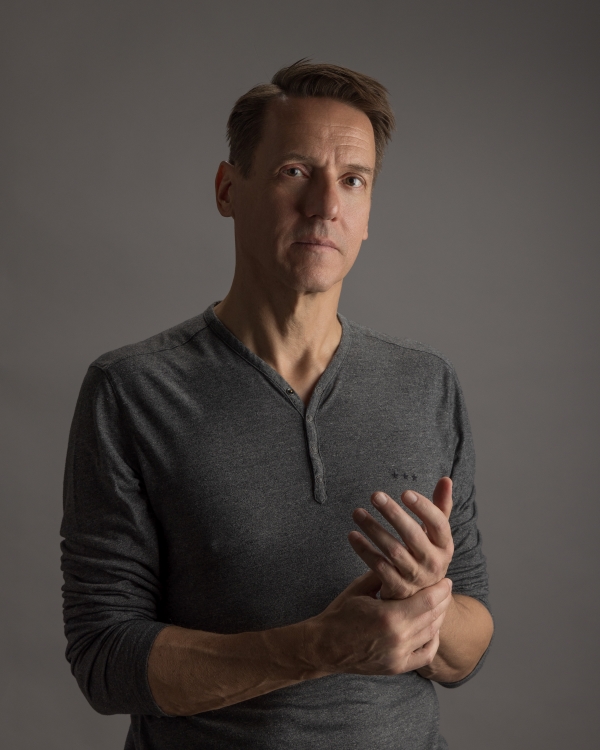 Decades
later and another spontaneous happening gave birth to the song “Before
My Eyes,” from the new album.
Decades
later and another spontaneous happening gave birth to the song “Before
My Eyes,” from the new album.