|
|
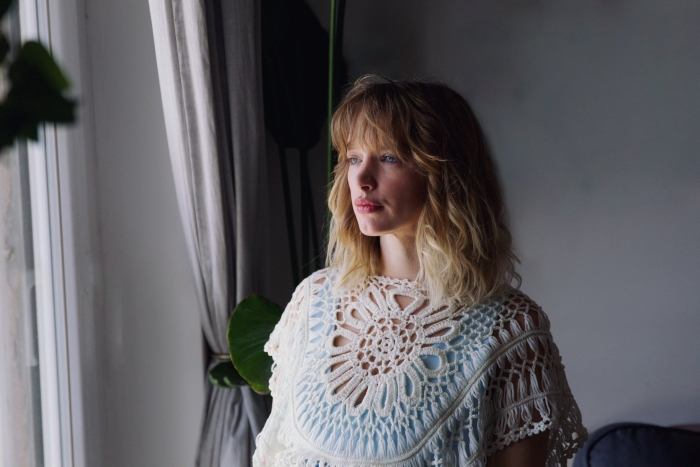
jojomago "baddest" Girl On The Italian Music Scene |
|
It is unusual for someone to confess to you their biggest dream in your
first face to face conversation, but in explaining her stage name
jojomago that is exactly what this incredibly talented singer and
songwriter did recently when she sat down with Riveting Riffs Magazine.
The jo part is easy, because it is her first name, but what about mago?
“In Italy Mago means a witch or a wizard. It has a different kind of
twitch and people are (she tilts her head to one side) why jojo the
witch? My biggest dream is to have grey hair and move out into the
woods. Yes, that is my hope and dream that I can grow into a wise old
witch in the woods with grey hair. (she laughs quietly) Who knows? Some
people think that a witch is a bad thing, but I’ll take it,” she says
with a hint of mischief in her eyes.
The name jojomago however has roots far deeper than when this American
lady moved to Italy fifteen years ago and she explains, “jojomago is a
nonsense name. I have a bunch of aunts and uncles and their love
language is making fun of you. When I was little, one of my uncles
decided my name was ‘jojomago, baddest girl I know.’ He would say it
over and over again and I hated it. “Baddest,” no I’m not the “baddest,”
I’m a good kid. It has
always been a name that stuck with me and when I decided to start a
music career I really wanted to have a name that was unique, one of a
kind, because I could go by Jo or JoJo, because that would make a lot of
sense, but there are a lot of artists out there that are Jo or JoJo and
you know how it is, finding an emerging artist is the worst thing ever
and there are other people with your name. You are never the one that
shows up in a search. I wanted to have a name that I was not just
creating for the sake of this music career. It wasn’t something I was
just creating for the sake of this music career. It is a name I have had
for my entire life. I decided to go with that.”
So, was it way back in Indiana that you started singing?
“I have always sung and I was taught music from the age of four. My
uncle would teach me folk songs and I would sing with the guitar. My
first and probably one of my only paid gigs, was singing funerals. I
would sing at church in the local, little, small town where I was from
and someone would say I would really like her to sing at my funeral. She
wrote a cheque and gave it to her friends for when she passed away, so I
would sing at her funeral.
We mentioned that jojomago grew up in Indiana, specifically in the small
town of Aurora, near Cincinnati, along side of the Ohio River and about
which she proudly says, “I claim all three states, Indiana, Kentucky and
Ohio.”
She elaborates, “I went to school at the University of Kentucky. I
majored in voice and Opera. When I graduated, I studied abroad in Italy,
because to study Opera you have to speak or take two years of Italian,
French or German. You don’t have to know what you are saying (she
smiles), but it is better if you do. I met a bunch of Italians and I had
met a bunch of Italians at university as well. When I graduated, I had
these relationships, so I decided to move to Rome to see if I actually
enjoyed living in Italy as an adult
and I kind of got hooked. I haven’t made my way back (to the
United States) since (big smile).
You have to start over and you feel like you are sixteen again. You have
to learn how to drive (according to new road rules) and all of these
other (things). You have to survive in the beginning. I feel that after
ten years of living in a different country, you have either come to
accept the differences and figure out how to get connected or you think
I have to get out of here. At fifteen (years) I am still pretty happy
about living in Italy. I think I will be here long term (another big
smile).”
As for her songwriting, “I don’t play any instruments. I play the piano
really badly and I play the guitar even worse. By studying music, I know
music theory, so that helps a lot, but the thing I am strongest with and
that I am able to do is sing. I have a pretty robust imagination. Every
song will start with a melodic line, but it also has lyrics. If I am
going to continue to work on the song and to push past all of my
inabilities it has to have a very strong feeling that I am trying to
then pursue. I love a melody that doesn’t go where you are expecting it
to go. I find a lot of emotions have a particular note that hurts a
little bit worse. When you see something and feel something and it
(connects) you go that’s what I want to write about.
When I moved here, I didn’t sing for a really long time. I studied Opera
in college and it is a similar experience to what a lot of artists have
had. When you study at a conservatory it is very intense and you are
surrounded by very talented people. It is easy to compare yourself to
the other ones and to think, oh wow they have something I don’t have.
They are going to pursue it and there is no room for me in that space. I
walked away thinking it wasn’t what I wanted to do. I wasn’t committed
to come to terms with that and to come back to music in a way that was
positive. I didn’t want to continue doing it, just because I should. I
took about four or five years, when I wasn’t really singing at all.
I really missed it. I am many things. I wear many hats, I’m a mom, I
have a job, I’m a wife. I do many things. I am American, I am in Italy,
but when I sing, I feel like I am truly present and I am truly showing
who I am. I really missed that, so I started singing again. I found a
music teacher, Marta Gerbi in Italy and she really encouraged me to
approach music, not as what I was supposed to be doing with rules, but
what did I want to do?
Over time, at one point, I said, I wrote a song and I don’t know what to
do with it. She said, great, write another one. I wrote ten songs, of
which, maybe five of them were trash. I came up with five and she said
great, we are going to make an album. I said what?
She is very well connected in the music world and she works with
a lot of great artists. She works with artists who are in Italy. She
said I have these five people you can contact and you can do an album
with any one of them. Who would you like to work with? It is this really
amazing experience and I wrote an EP in 2023 and the entire time I was
thinking I don’t know what I am doing. I am just present and letting
this experience happen. It was such a fulfilling experience to write a
song and then to work on it, tear it all apart and then bring it to a
producer and to then have them put their ideas, thoughts and their own
expertise into it. Then you say look we have this finished thing. I
found it to be extremely fulfilling. In a way it has given me an
understanding of what a gift it is to be able to make music.” (Editor’s
note: Andrea Filipucci produced the EP)
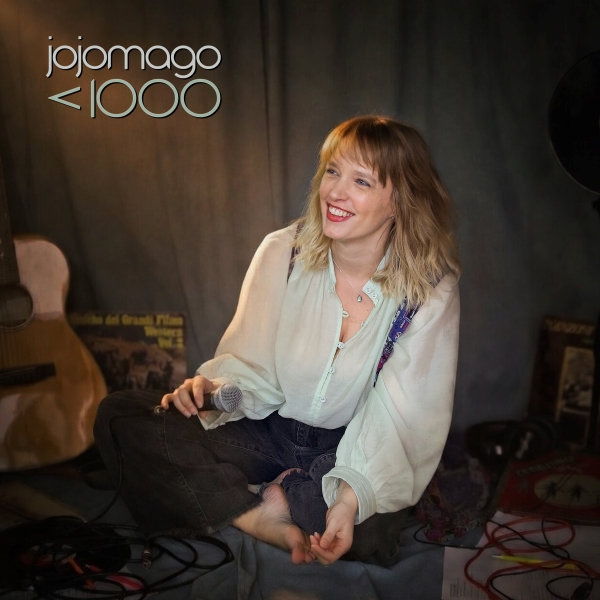
The conversation takes a momentary detour as she mentions, “I just did a
concert for the album <1000 (title pronounced as Less Than A Thousand)
that just came out. I decided to do a live recording concert and I asked
if he could come and play guitar for one of the songs. He did and it is
a beautiful experience when you get to create with people. The song that
he played on is the first song that I wrote and it is called “Siren.” I
think it is an extremely interesting piece in my opinion, you might
disagree or other people might disagree. It has some very unexpected
chord changes. It is very artistic in nature. There is a little bit of
Italian in it. When I wrote it, it was very different and I think the
one thing I have found that is the most exciting about writing music is
you have to be very not precious about changes. You can have an idea and
you can be very specific and say this can’t change. You can (also) be
open to saying bring whatever ideas you have to the table and I am open
to have this piece transform into whatever it can be. He rewrote the
guitar line on that and it completely changed the whole piece. It made
it something ethereal and much bigger than I could have imagined. Every
time you do something you learn a little bit more. You bring a little
bit more to the table and you have more opinions and you know what you
are doing. Don’t be so sure of yourself that you are not open to
somebody else’s idea.”
Back to the songwriting, jojomago says, “Breaking rules is great, but I
think the thing I have had the hardest time with is I like to know the
rules in order to be able to break them. I don’t think there are rules.
There are genres and what works and what doesn’t work, but what works
for some people doesn’t work for other people. To truly have your own
music, you have to decide what you want to do and you have to assume it
will not be liked by everyone or maybe no one (will like it). That
shouldn’t stop you from deciding this is your taste.”
With my EP I wrote a song, and it needed to come out. I had bottled it
up for however many years and I had to write it down. The five songs
that made it on the EP were the ones that were most necessary (she
emphasizes with a firm downward motion of her hands). I have a song
about climate change; I have a song about war and what it means to be a
woman and whether or not we are just disappearing. Whenever I would
perform them, I would have an entire audience of Italians sobbing.
Whatever I was singing and whatever I was feeling was given for them.
They were picking up an emotion and they were not crying for me, they
were crying for themselves. They were listening to the music and feeling
an intense emotion. They were allowed to feel this emotion, because they
had this moment when they were just sitting quiet and listening to a
song. It is a huge power and I am really surprised by (you can see the
disbelief on her face) how often I make people cry. They probably had no
idea what I was saying (she says laughing).
I don’t have any expectation for the people who listen to my music. We
want people to like it and we want people to enjoy what we have done and
what we have put our energy into. I am not upset if people don’t like
the music or find it to be too much. It is not my job to tell people
what to do. I think people find music that is helpful to them. If my
music can be a part of that, it is an amazing thing. I am not going to
need that reaction to determine if I am going to continue writing.
I believe very strongly in the death of the artist. Even when I am
creating a piece, I take myself out of it. Every time I have recorded a
demo and it is basically done, I decide to (give it to) a producer I go
this is yours now for a little bit. I am going to take it back and I
will have an opinion if you need me to have an opinion, but for the
moment I am giving it to you. You get to decide how you want to move
forward with it. I find that amazing to be able to say this is yours. It
is like having a child, the child doesn’t necessarily do what you expect
it to do. It is not your copy; you aren’t in charge of determining
what this person is going to become. Your job is to create as
best as you can and to (provide) a healthy environment and offer
guidance. Ultimately, the art will be the art. It might surprise you
where it is going to go, but it is not your job to determine what it is
going to become.”
Let’s
talk about your current album <1000.
“The album was written in two parts. I started working with a producer
named Matteo Cantagalli. We produced together three songs,
“Smoking,” “Night Terrors,” and “Lose My Number.”
“Smoking,” and “Night Terrors,” is where the album’s concept began. I
had done (already done) the EP and I didn’t want to do an EP again. I
want to do something different. Then this kind of Amy Winehouse, Blues /
Soul song came, which was
“Night
Terrors,” and I said okay let me
see if I can write another song like that and that is when “Smoking,”
happened. I think of those two as cousins and they have a very specific
vibe, with a very rich, cinematic feeling. I thought if I could write a
whole album in this world, what a beautiful, fun place to be. We did
three songs together and he started working with another artist. He was
not available to do the rest of the songs for the album.
I worked with two other producers Gabriele Cannarozzo and Pino Iodice.
They work together and they
have a studio called Studio 8.
I would like the opportunity to sit down and take a month away from the
world and write an album. The reality is that is not my life and that is
fine too. I write in bits and pieces. I write songs at different times
and I produce them at different times and the album comes together in
that way. I did a single that is not on the album, “Roll Over,” which is
the song you asked how did you hold that note for so long.
“Roll Over,” we decided to leave as a single and we
released it last year. It has a very fun vibe and it is almost R&B.
Opera taught me how to sing. It taught me a lot of the rules and a lot
of the technique and obviously you don’t belt in Opera, but it is all
about learning the sport and the ability of your body to sing. That
training has been huge in allowing me to do whatever I want to do with a
song. When you are writing your own music you get to write what you are
actually able to do. Normally, you don’t write music that you then can’t
sing. I have written some songs that I get nervous, before I have to
sing them live. I go oh god why did I do this to myself. I really wanted
to finish “Roll Over,” that way. I wanted that song to end on this
climatic, sustained note. Halfway through I sing even higher.
As an Opera singer, I am technically the highest range. I am not as
comfortable singing in the lower range. Belting is just something I have
always had an ability to do.”
As for some of the other songs, “ The song,
“Empty,” is more fun than it should be. They
brought back the produced version of it and I said wow! You guys went
all out on this one. It is amazing. It has a lot of really good energy
in it. I feel like “Smoking,” has a whole atmosphere. The song that I
most proud of or surprised by is “Quiet.”
It is not a dancing song and they pulled it back. It is almost
acoustic. That is the most fun vocal range. It is fun to sing those
notes, go in all of those different directions, have all of that emotion
and be angry and sing angry.
(About “Quiet”), I think all of my music starts from a true feeling or
true emotion. It all starts from something that I felt. I have not yet
written something that is completely fiction. I allow myself complete
liberty to be very dramatic and to expand the emotion to fit the drama
of the music.
“Quiet,” ended up being a piece that if you wanted to give it an
interpretation and that is (about) a romantic relationship, but that
wasn’t the original feeling that I was frustrated with it was more of a
friendship relationship. “Quiet,” comes from anxiety and when your brain
is going a million miles a minute. You are annoyed and (it is like) can
you just calm down and stop. I feel like the first verse is saying can
you just be quiet or how can I be quiet. The second verse is much more
you aren’t listening to me and if I am not quiet, I am going to end this
thing or blow it open or say something that I am going to regret or that
I cannot walk back.
It ends, in music theory speak with a special and in my mind a couple of
specials back-to-back. I have one thing to say and okay I want to say
that and I want to say this and I also want to say this. It is funny,
because this entire song is about, stop talking, stop talking and
instead I have a million things to say. I really like the final bit, “Oh
don’t ask how I’m doing, when you just don’t care / Don’t ask how I’m
feeling, when there is no air / My mind keeps on reeling / There’s no
time to spare / So I’m laying it bare / But you still don’t hear / Shh.”
There is this cliff and she is just screaming and then just gives up and
stops. The song ends with her shh. I think that is drama at its best
(she laughs). I love an argument when you just stop talking.”
The song “Empty,” which full disclosure, is Riveting Riffs Magazine’s
favorite song on the current album, comes up next in our conversation.
“Empty,” is a feeling that most of us feel. We are bombarded with
information and to cope we disassociate. I think there is something
overwhelming with what is going on with our lives, with our phones and
with all of these things. It is something that I am very much having a
hard time with and I don’t have a solution for, but I am aware of the
fact that I am addicted to my phone. I reach for it and I look for those
little adrenaline hits. I use it to avoid the monotony of the other
moments. It does end up making me feel empty.
I have kids, so a lot of my songs are at times lullabies. (she laughs
and says) I don’t know if they have sweet dreams. I have yet to write a
happy song. “Empty,” is one of those songs that when they (audiences)
sing the lyrics back to me randomly, I go, oh I don’t know if I want you
to know that’s a feeling I feel. It is, I am empty inside, it is rough,
because you want to know that the people around you are fulfilled and
happy. Empty inside is completely counter to that.
The song itself however is robust, full, fun and the most exciting of
all the music I have ever written. It is not a sad song in the music.
The music is very fun, coy and very sneaky. I really like that contrast
and how beautiful and vibrant the guitar is. There are some beautiful
harmonies in it. I (thought) I don’t want people to turn off the album,
before they have a chance to listen to this one. I want you to know
there is this song on this album, because it is full and vibrant and
really fun.
(She
quotes the lines). ”Can you fill it up / Can you even try / I know
what I need but I can’t seem to get there / Can you fill it up
/ Can you even try / I know what I need but I can’t seem to get
there.”
The song “Night Terrors,” has a backstory and jojomago explains, “It was
the first song that I wrote after the last album. It was the song that
started the rest of it. It is a sad song.
It is the most intense of all the feelings I have felt in my
life. It is talking about out of the body experiences. There are these
moments where your soul is pushing at the boundaries of your actual
physical body.
When I was little, I used to have night terrors and the term for what I
was experiencing is called Alice In Wonderland Syndrome. When you are
really, really tired or you take a bunch of cold medicine some people
experience this thing when you close your eyes and they can’t understand
where the limits of their bodies exist. In their minds their hands are
the size of the room. They have to open their eyes and stare at their
hand, because otherwise it is going to go to the size of the room. I had
night terrors and I was having that experience. The words are “I
couldn’t understand the fear / My skin would disappear.” My mom would
turn on the lights and I would be screaming for her as she was holding
me. It was a phase that I did grow out of, but it is a phase that
a lot of kids go through.
The second verse is another kind of out of body experience, but one that
we experience in adolescence or as young adults, which is you drink too
much. You try to go have fun, you have taken all of the things you have
taken and you lay down and go to bed and the room is spinning. You think
you are going to be sick.
The third is about when I had an aneurysm right before I started writing
music. I am very okay now, but it was unexpected. I had surgery and
luckily the surgeons were great, but I shouldn’t have survived it. It
was very much an out of body experience, because I was on the real
drugs. When they stopped giving me the drugs I spent a night when I felt
like I was staring down at myself. I was like a helium balloon stuck in
the corner of the room. I felt like my body was floating off like Peter
Pan and if there were not walls and a ceiling, I would have gone off
into the sky. I woke up in the morning and I was no more drugs for me.
It was a very intense experience. When you have a near death experience
you appreciate being alive.
The thing I find so interesting and the reason I wanted to write this
song, I didn’t expect to write a song about dying, almost dying or
having a near death experience. I think sometimes when you think that
would be a great thing to write a song about, they are the songs that
never come. I have no problem writing a dark song, which is all I know
how to write. It wasn’t one of the songs I was planning on writing. I
wasn’t writing the song necessarily about dying.
I am really fascinated with the idea of whether you want to call it the
soul or whatever it is that makes us, us, how does it not float away.
What keeps us grounded. What keeps us inside this body. It is very
strange that we don’t float off every night. I thought writing about
that feeling was interesting.”
Reflecting upon starting life in America and transitioning to life in
Italy, jojomago says, “In life we always compare ourselves to other
people so there are certain phases and things you are supposed to do and
that society tells you, blah, blah, blah. My biggest thing living in a
foreign country is I don’t belong here. I never will belong here. I can
carve out a community and make friends and I can have family. I can make
sense of this is my home. There will always be a part of me that is
foreign. I view that as a great strength, because I get to play dumb and
the things that I don’t want to do and I don’t want to compare myself to
other people on I can just say we don’t do that in my country. I am
different blah, blah, blah. The things I want to pursue I can say I want
to pursue even if somebody is looking at me and going, why are you doing
that, it is really weird. I really leaned into this idea that I get to
choose what I will pursue and what I will not pursue.
Having said that, I think one of the challenges of being a foreign
artist in Italy is probably the same across the world. I don’t think
this is just an Italian thing. Italy is a country that desperately wants
to promote their own culture, music and their own people. A lot of
programs or opportunities will be for Italians. Some of those programs I
can slip in by establishing myself within the emerging artists. In that
community with other artists who are like me. I can go to a bar and they
will say just let her sing. I have a couple of instances when they will
say, but you are not singing in Italian and nobody understands what you
are saying. This isn’t what we are trying to do tonight. There are
certain avenues that are not open to me, because my music is not
Italian. I have had a lot of Italians say, why don’t you write in
Italian. I say I would love to write in Italian. It is really, really
hard to write in a language that is not your native language. Perhaps
there will come a day when I speak Italian at a level when (she searches
for the right word). In English a lot of my music will have little turns
of phrases and you understand what I am trying to say, but it has two
meanings. Depending on how you read it, it could be this or it could be
that. I really like there to be that freedom of you interpret what I am
saying, but because it is my language I know more or less what the
interpretations could be. In Italian I have to be direct. I have to say
what I am trying to say and if you didn’t understand I didn’t say it
right. Again, I don’t know the rules well enough to break them and in
writing music you really have to break rules. I am not able to write in
Italian.”
“I think I want people to know I am okay. I find the reason I started
writing music and I continue to write music is I like to pick at a scab.
There are uncomfortable feelings and I make art out of it. A lot of it
comes from something real, but I allow myself to expand on that. I come
from a really stable place with it. I am not writing about things I am
currently struggling with. I am not torturing myself. I would love to
write a happy song and maybe sometimes I will find the thing and that is
worth writing about. I am drawn to these difficult feelings. I am drawn
to the tension and what hurts a little bit. That is what I am interested
in most to this point about writing music. It is the thing I am most
curious about and the thing I have the most fun doing. It is coming from
a place of absolute joy. I really enjoy the collaboration, the
connection, the friends along the way. I love the process of making
music and writing music. It is a beautiful thing to get to do. While the
music itself might be a little bit dark. My hope is not that you listen
to it and go now I am depressed. The people that I don’t know feel seen.
That is what I am hoping to do by writing it,” she concludes.
Jojomago does not write depressing music. She does write deep music and
it is important for the listener to realize that. What makes really good
songwriters are the ones who can tap into their inner emotions, feelings
and experiences, without necessarily making the song about themselves.
Otherwise, they are just words. The collection of songs on <1000 are not
dark, they are reflective and they provoke you to think deeper about
yourself.
You can follow jojomago
here
and you can listen to her music on
her YouTube page
#JojomagoInterview #JojomagoIntervista #MusicaItaliana #IntervistaDiMusicaItaliana #EntrevistaDeMusicaItaliana #JojomagoEntrevista #RivetingRiffs #RivetingRiffsMagazine #MujeresEnMusica #DonneNellaMusica #WomenInMusic
|
 I
have always thought of music as being more than just something fun. I
have always seen how powerful music can be. Soul as a genre is not
something that I have always sang but understanding that music can be a
soulful experience. It is something I have always been cognizant of and
it has been very important to me when I sing,” she says.
I
have always thought of music as being more than just something fun. I
have always seen how powerful music can be. Soul as a genre is not
something that I have always sang but understanding that music can be a
soulful experience. It is something I have always been cognizant of and
it has been very important to me when I sing,” she says.
 There
is a harmony I originally wrote, but when I produced it, they stole my
melodic line and they put it in the harmony. I was hey that was mine and
they said it was so good we should lean into it.
There
is a harmony I originally wrote, but when I produced it, they stole my
melodic line and they put it in the harmony. I was hey that was mine and
they said it was so good we should lean into it.