 A
Boomer's Memories - The Old vs the New by Rick Wrigley
A
Boomer's Memories - The Old vs the New by Rick Wrigley
A
Boomer's Memories - The Old vs the New by Rick Wrigley
Back in the day, before digital sound and computers came
along presenting a radio show was a lot of work. There was selecting the next 45
RPM record and cueing it up, loading the reel to reel tape and cueing it up,
selecting the next recorded announcement from the cart rack and loading it into
the cart machine. All this had to be done while you were thinking up the next
bit of DJ patter to announce into the broadcast. There was a lot of physical
work to be done and at the end of the typical five hour broadcast shift, we
would emerge from the control room joyfully drained, knowing that we, as the
sports analog goes “left it all on the control room floor.”
Many of the DJs that came along with me remember the
radio station control room consisting of reel to reel recorders, turntables and
cart machines, which have now been replaced by a computer or two and they mutter
at how much better it was back in the day. At times I tend to agree, there was a
pride that went along with mastering all those little chores and choreographing
them into the ballet of doing radio the way it was meant to be. Maybe “ballet”
is the wrong allegory, it was more like a jitterbug or a disco dance with lots
of energy required. My old buddies tend to look at the broadcast computer as the
enemy.
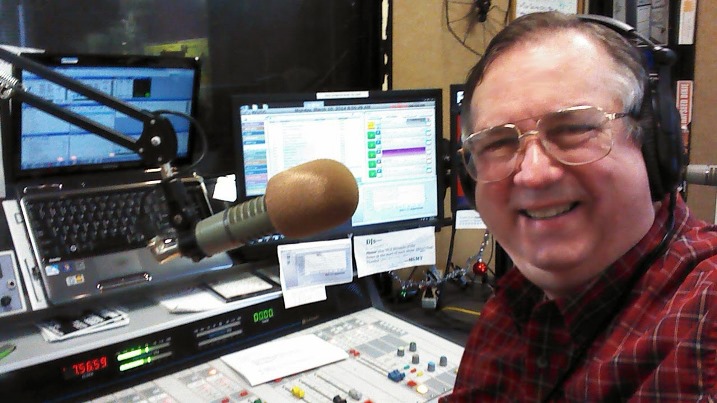
In the photo at the top you see the control room at
WUSC-FM. The computer on the left is my laptop running the SAM Broadcaster. The
monitor in the middle behind the microphone is displaying Audiovault's control
room page. The monitor behind my head is for general use, information searches,
weather etc. In the sense that the modern broadcast computer tends to take away
the job of “disk jockey,” I agree completely. But there is another side of this
equation that is rarely calculated but when it is, it is pretty spectacular. Not
many people get to see this side of radio. The disk jockey actually controls the
computer instead of the other way around. There are a handful of very lucky guys
and gals that get to do radio pretty much on their own terms. They get to take
advantage of the benefits that computers bring to the control room and they are
not too shabby.
I am not going to get into the argument about which
produces better sound, vinyl or digital. Each of them has its own advantages and
supporters. What I am talking about is how computers can actually help the DJ do
a better show.
When I do a show on WUSC-FM or on WOGR the internet
radio station that I own, the main music and production elements are my laptop
computer and a piece of broadcast software called SAM Broadcaster. SAM provides
similar capability as other software used by broadcasters such as Audiovault or
Scott Systems, now called WideOrbit. At WUSC my music and production elements
are comprised of SAM, the promos, Public Service Announcements and AudioVault
provides the Station IDs.
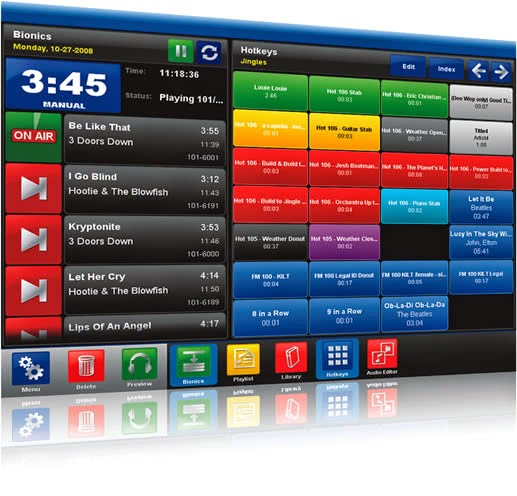 The
photo to the left (click on photo to enlarge it) depicts a typical "WideOrbit
control room display. One advantage that a computer can give a DJ is called
“hitting the post,” which means talking over the instrumental introduction of a
song and finishing a beat before the singer starts singing. If you listen to a
professional DJ you will hear that a lot. However, it is not an easy thing to
learn. You have to know exactly how each song starts and when to expect that
first lyric. When we played vinyl, we could take a moment and listen to the
opening and remind ourselves what it sounded like. We would write the length of
the intro down on the record label if the record company didn’t do that for us.
However, it was still hit or miss. One of the features of broadcast software is
you can cue mark the audio file with the post and then it will count you down on
the screen to the time that you have to stop talking. Cool, eh!
The
photo to the left (click on photo to enlarge it) depicts a typical "WideOrbit
control room display. One advantage that a computer can give a DJ is called
“hitting the post,” which means talking over the instrumental introduction of a
song and finishing a beat before the singer starts singing. If you listen to a
professional DJ you will hear that a lot. However, it is not an easy thing to
learn. You have to know exactly how each song starts and when to expect that
first lyric. When we played vinyl, we could take a moment and listen to the
opening and remind ourselves what it sounded like. We would write the length of
the intro down on the record label if the record company didn’t do that for us.
However, it was still hit or miss. One of the features of broadcast software is
you can cue mark the audio file with the post and then it will count you down on
the screen to the time that you have to stop talking. Cool, eh!
Another feature of broadcast software is the ability to
search for an audio file by artist or title. This is especially useful when you
are doing a request show or you come up with a combination that you would like
to play. Software also keeps a log of the music that you play and in some cases
if it is integrated to the radio station’s RDS stream it will automatically put
the song information on the face of the radio receivers that have RDS
capability. The log of songs played, created by the software, are used by
performance rights providers to pay the licensing fees (so royalties can be
dispersed to artists). I do not have to keep a manual log.
I have mixed feelings about computers in the control
room. They do make doing a live music show easier and they help me fill the time
on my internet station that is not covered by volunteer DJs. I suppose they are
like any other tool that man has invented. They can be used for good or evil!
They are good when they help the live on air DJ and they are evil when they
replace him or her. Oh MY!
Rick Wrigley first appeared on air as a DJ 50 years at a prominent radio station WCOS AM / FM in Columbia, South Carolina (United States). Rick is a mentor to broadcasting students at the University of South Carolina where he also hosts the BackBeat show on Monday mornings on the university's radio station WUSC. Rick Wrigley is the owner of WOGR, a 24 hour / 7 days a week internet radio station that features a mix of live DJs all of whom have professional broadcasting experience and / or professional experience as musicians and singers. He also hosts a show on Fridays that airs in the U.K.
This column reprinted on June 16, 2014, courtesy of A Boomer's Memories and the author Rick Wrigley. All photos and all text are protected by copyright © and may not be reproduced in print or on the internet or through any other means without the written permission of Riveting Riffs Magazine and Rick Wrigley All Rights Reserved